Field notes / Cosmos & extraterrestrials
EBANI
Unsupported claim
Meaning, context and sourced connections in the Great Awakening Map.
Locate on the interactive mapIn the map’s worldview
Esoteric interpretation
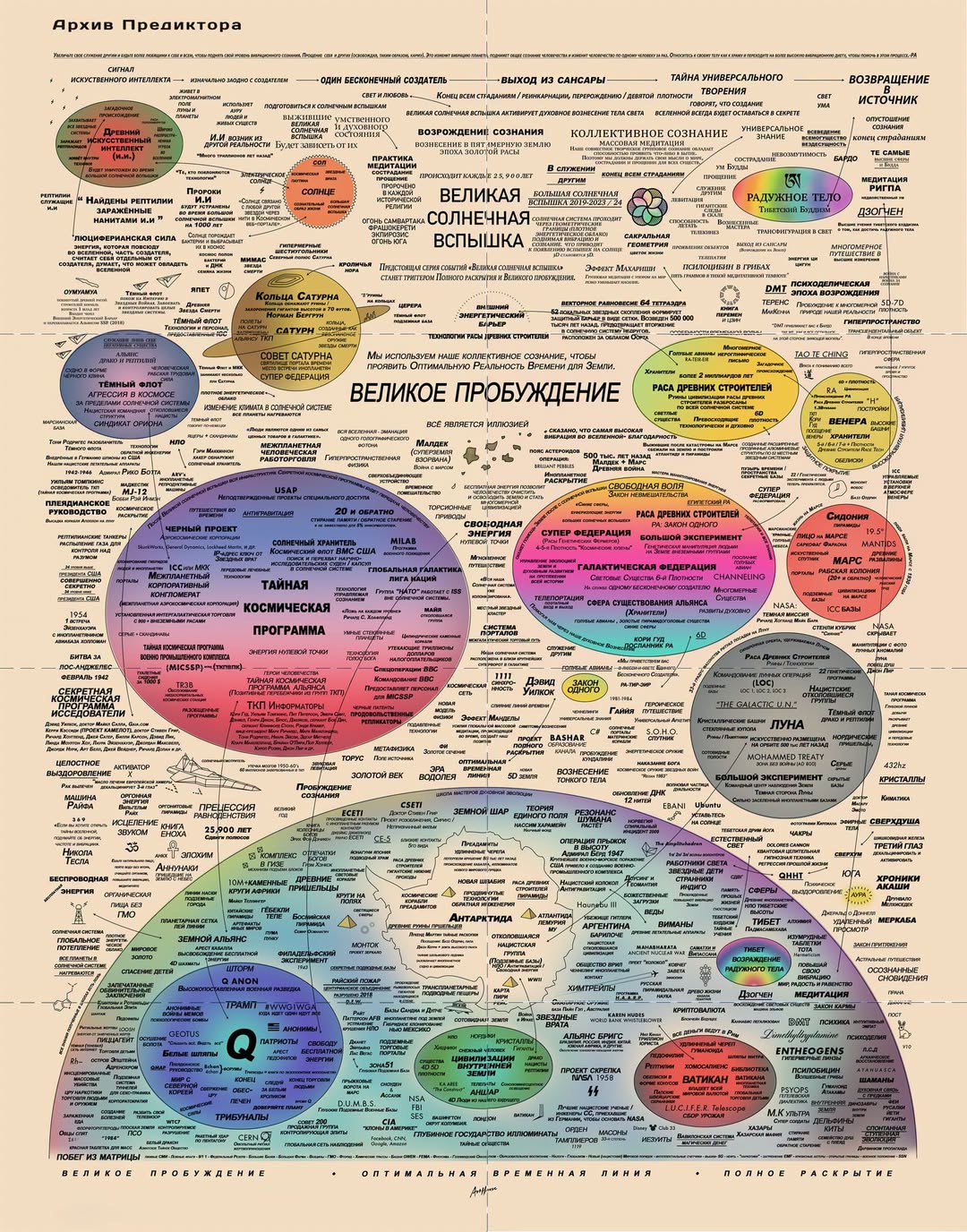
EBANI broadens the poster’s anomaly vocabulary beyond the familiar metallic spacecraft. Its biological-sounding category suggests that an aerial form might be a living or unusual entity rather than a vehicle. That possibility is the label’s narrative role; a shape in the sky does not determine an organism’s existence, origin or spiritual significance.
An interpretive reading of the poster and the sources below.
Sources for this interpretation · 1
- Supplied poster — wording of the claimBelief / proponent source
Records the EBANI label or surrounding claims. The explanation of its narrative role is an interpretive reading.
Definition & background
A Spanish UFO acronym for an unidentified anomalous biological entity, used for elongated aerial forms.
Evidence & research
A classification used by observers does not demonstrate biological or extraterrestrial origin.
About these sources
The supplied poster is the direct source for this label. The additional reading explains a related topic; it does not independently verify this claim.
Read more
- Supplied poster — wording of the claimBelief / proponent source
- Background on UFOs / UAP — NASA — UAP frequently asked questionsRelated background · not verification
Follow the connections
Related topics
These relationships describe what the map and its cited sources say. A connection does not establish that a claim is true.
Context / documented relationship
UFOs / UAP
EBANI is a UFO-report label for an anomalous aerial form → UFOs / UAP
EBANI expands a Spanish anomalous-entity label used in UFO reports. This is a subtype of reported unidentified observation; it does not establish that an object is biological or extraterrestrial.
Sources for this connection
- Matching high-resolution Russian map — primary record of the poster’s claimsBelief / proponent source
- NASA — UAP frequently asked questionsReference / research