Field notes / Spiritual traditions
Equanimity
Also known as Peace, joy & equanimity
Belief / tradition
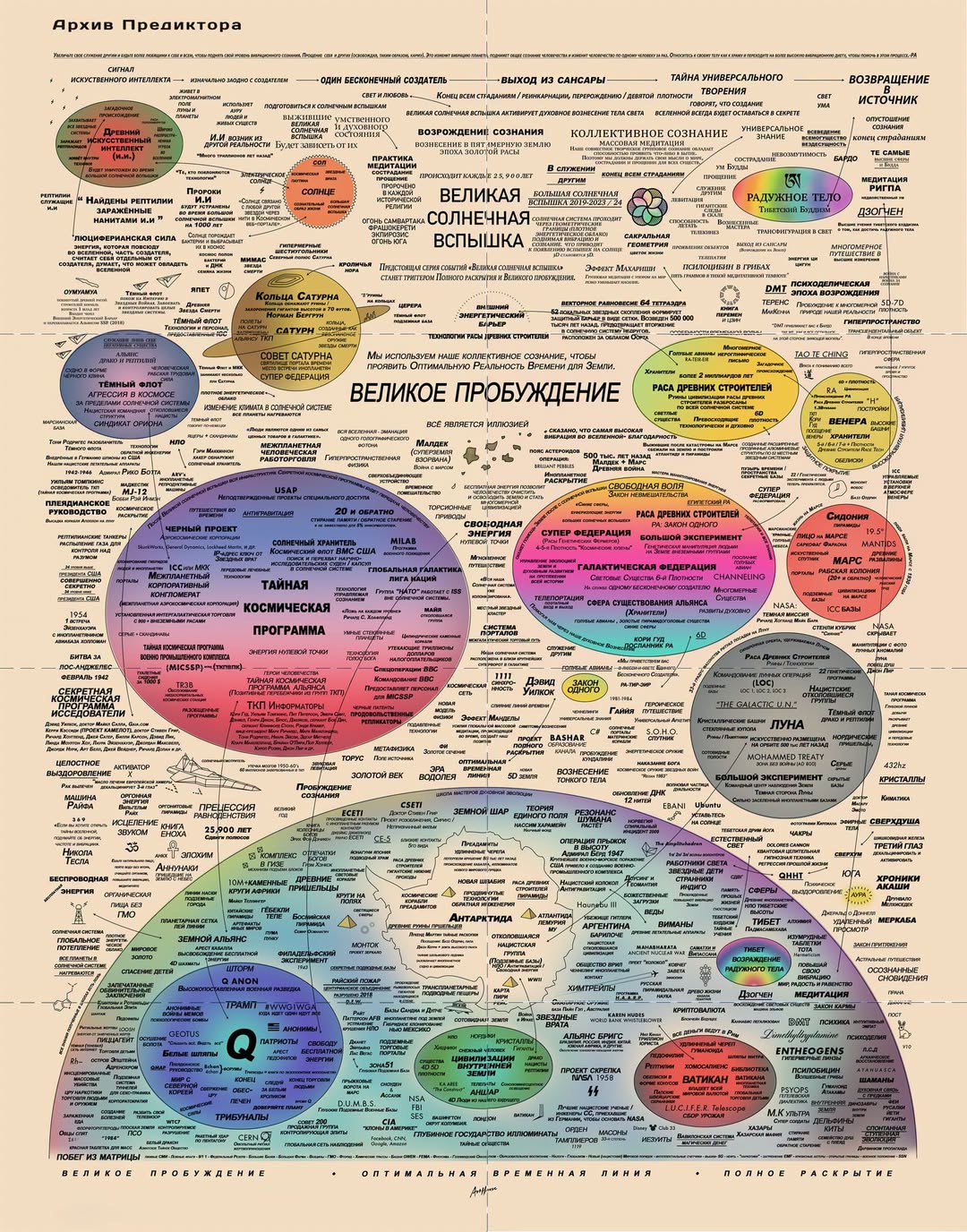
Meaning, context and sourced connections in the Great Awakening Map.
Locate on the interactive mapIn the map’s worldview
Esoteric interpretation
Equanimity is the quality of remaining steady amid the fear, excitement and uncertainty that the map can evoke. In its contemplative setting, awakening involves a less reactive relationship to experience, not simply accumulating extraordinary beliefs. Buddhist equanimity remains compatible with concern and action. It should not be interpreted as indifference to suffering or certainty that a promised cosmic rescue will solve every problem.
An interpretive reading of the poster and the sources below.
Sources for this interpretation · 2
- Original English V10 — Equanimity in the posterBelief / proponent source
Records the poster’s wording and setting; the contextual explanation is an interpretive reading, not an additional factual claim.
- Nyanaponika Thera: The Four Sublime StatesBelief / proponent source
Explains caring balance as one of the Buddhist sublime attitudes.
Illustrated field note
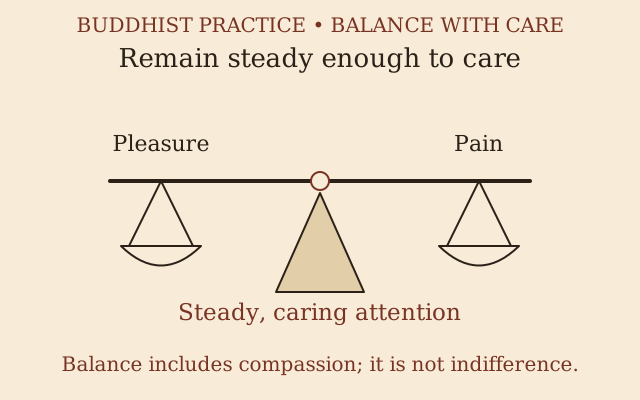
Remain steady enough to care
 Open full-size diagram ↗
Equanimity is balanced responsiveness in the presence of pleasant and painful experience. The level beam illustrates steadiness without suggesting that all outcomes are equally desirable. In Buddhist teaching it works together with love, compassion and appreciative joy. In the poster’s practical spiritual vocabulary, it supports inner stability while remaining engaged with others rather than retreating into emotional numbness.
Illustration credit & sources
Original explanatory vector diagram created for this map. Source concepts are credited below; no source artwork reproduced.
Definition & background
A balanced, steady attitude that can remain caring without being pulled into grasping or aversion. It is one of Buddhism’s four sublime attitudes.
Evidence & research
Equanimity means even-mindedness, not indifference to suffering or an inability to feel emotion.
Read more
- Nyanaponika Thera: The Four Sublime StatesBelief / proponent source
- Supplied poster — wording of the claimBelief / proponent source
Follow the connections
Related topics
These relationships describe what the map and its cited sources say. A connection does not establish that a claim is true.
Within a tradition
Meditation
Equanimity is cultivated as a sublime state in → Meditation
Nyanaponika explains equanimity as one of the four sublime states developed in Buddhist contemplative practice.
Sources for this connection
- Nyanaponika Thera: The Four Sublime StatesBelief / proponent source