Field notes / Ancient worlds & origins
OOPART
Real topic · speculative overlay
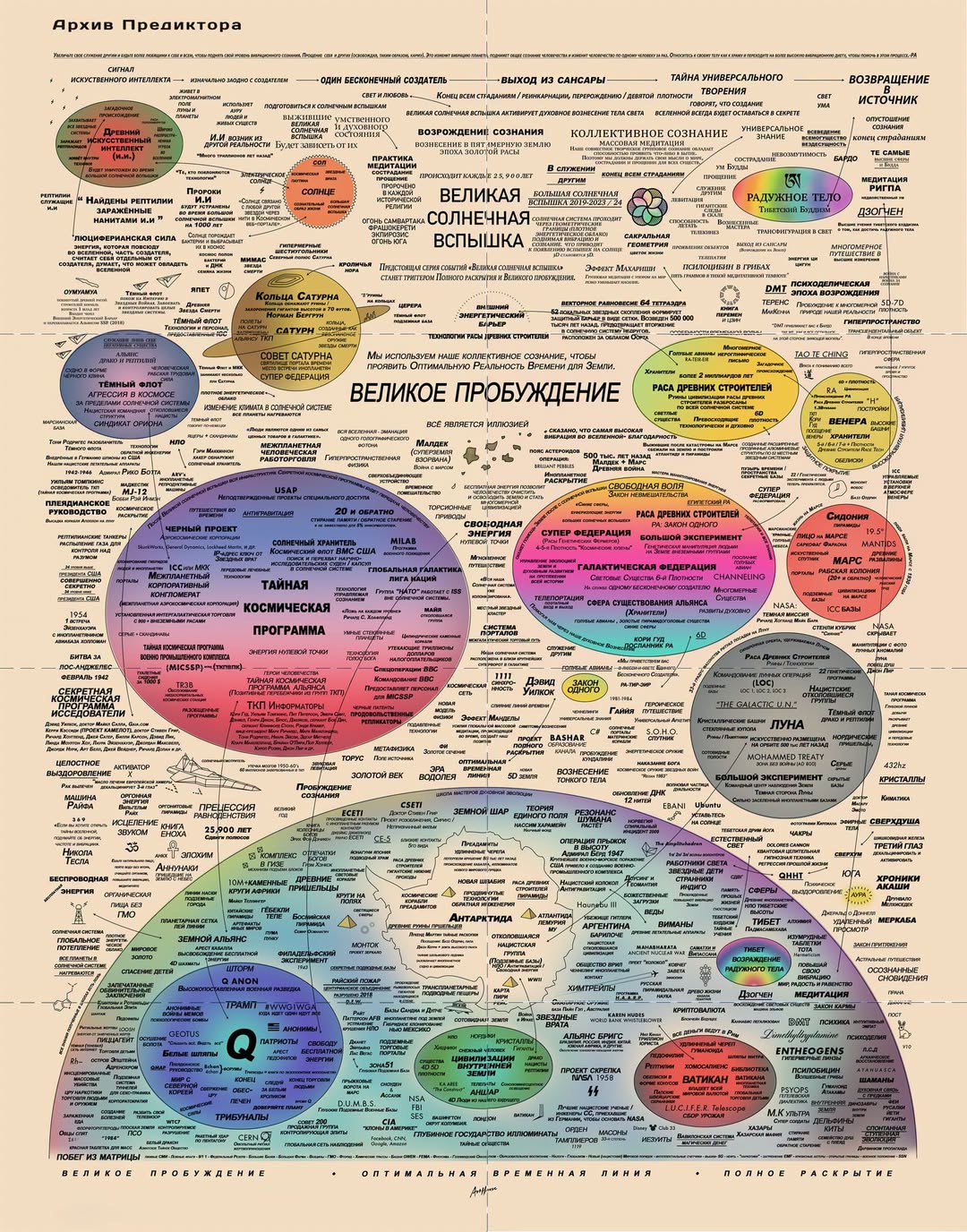
Meaning, context and sourced connections in the Great Awakening Map.
Locate on the interactive mapIn the map’s worldview
Esoteric interpretation
An OOPART functions as a challenge to a timeline: if an object seems too advanced or out of place, the map invites a radically different history. The esoteric attraction is the possibility that accepted reality has omitted an entire civilization or technology. Each object still requires its own provenance and dating; the category itself supplies no such evidence.
An interpretive reading of the poster and the sources below.
Sources for this interpretation · 2
- Supplied poster — wording of the claimBelief / proponent source
Primary artwork showing OOPART; supports this reading of the map’s wording and setting, not factual verification of its claims.
- Background — British Museum: scientific examination of a claimed ancient crystal skullRelated background · not verification
A museum examination demonstrates why individual claimed anomalies need specific provenance and investigation.
Illustrated field note
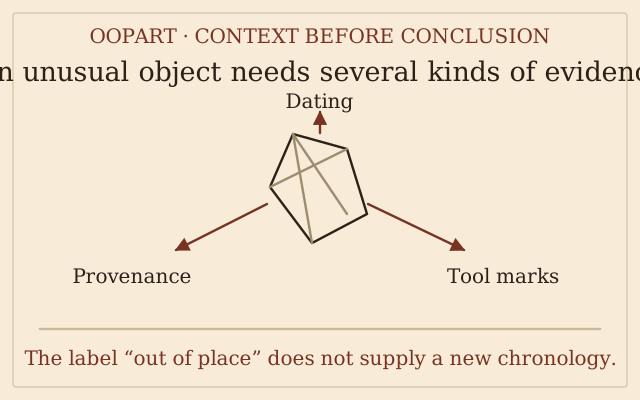
The artifact is a question, not an answer
 Open full-size diagram ↗
An “out-of-place artifact” appears to challenge an accepted timeline. In the map that apparent mismatch invites an omitted civilization or lost technology. The diagram shows why the object must be examined through several independent questions: where it came from, when it was made and how it was worked. The British Museum’s investigation of a claimed ancient crystal skull is an example of such material scrutiny.
Illustration credit & sources
Original explanatory diagram created for this map; source concepts are credited below. No source image reproduced.
Definition & background
“Out-of-place artifact”: a label for objects claimed to contradict accepted chronology or technology.
Evidence & research
Each object requires its own provenance, dating and archaeological context.
Read more
- Supplied poster — wording of the claimBelief / proponent source
- Bad Archaeology: how out-of-place-artifact claims use archaeological evidenceReference / research
- Background — British Museum: scientific examination of a claimed ancient crystal skullRelated background · not verification
Follow the connections
Related topics
These relationships describe what the map and its cited sources say. A connection does not establish that a claim is true.
No specific relationship is currently supported. Nearby placement alone is not treated as a connection.