Field notes / Spiritual traditions
Karma
Belief / tradition
Meaning, context and sourced connections in the Great Awakening Map.
Locate on the interactive mapIn the map’s worldview
Esoteric interpretation
Karma makes spiritual change an ethical process rather than simply an increase in power. Within the poster’s liberation theme, harmful patterns and attachments must be worked through instead of carried endlessly forward. It can explain why compassion and forgiveness appear beside extraordinary abilities. This does not mean people deserve their suffering, or that every misfortune reveals an identifiable action in a previous life.
An interpretive reading of the poster and the sources below.
Sources for this interpretation · 2
- Original English V10 — Karma in the posterBelief / proponent source
Records the poster’s wording and setting; the contextual explanation is an interpretive reading, not an additional factual claim.
- Study Buddhism: KarmaBelief / proponent source
Explains intentional action and its consequences in Buddhist thought.
Illustrated field note
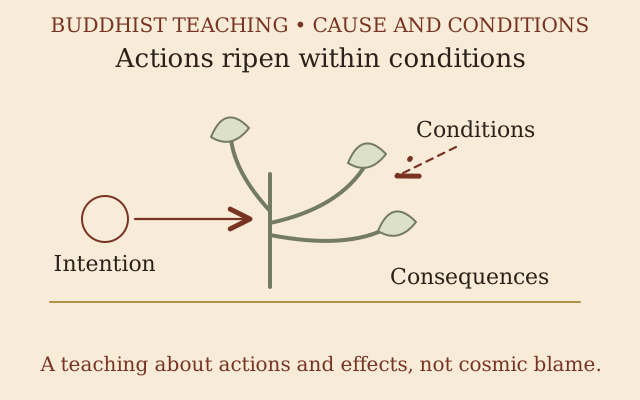
Actions ripen within conditions
 Open full-size diagram ↗
Karma connects conduct with the map’s rebirth and liberation themes. In Buddhist accounts, mental impulses and intentional actions help shape patterns of experience. A seed and branching plant show how consequences depend on conditions; this is not a machine that gives every person what they deserve. The map’s spiritual use of karma should not be used to blame someone for illness or hardship.
Illustration credit & sources
Original explanatory vector diagram created for this map. Source concepts are credited below; no source artwork reproduced.
Definition & background
Teachings about intentional action and its consequences; Buddhist schools analyze how impulses and actions shape experience and rebirth.
Evidence & research
A religious and ethical framework, not a scientific rule that every misfortune proves a person's guilt.
Read more
- Study Buddhism: KarmaBelief / proponent source
Follow the connections
Related topics
These relationships describe what the map and its cited sources say. A connection does not establish that a claim is true.
Within a tradition
Reincarnation / rebirth
Karma is taught to shape experiences of rebirth → Reincarnation / rebirth
The Buddhist account of karma explains actions and their consequences, including effects on later rebirth.
Sources for this connection
- Study Buddhism: KarmaBelief / proponent source